
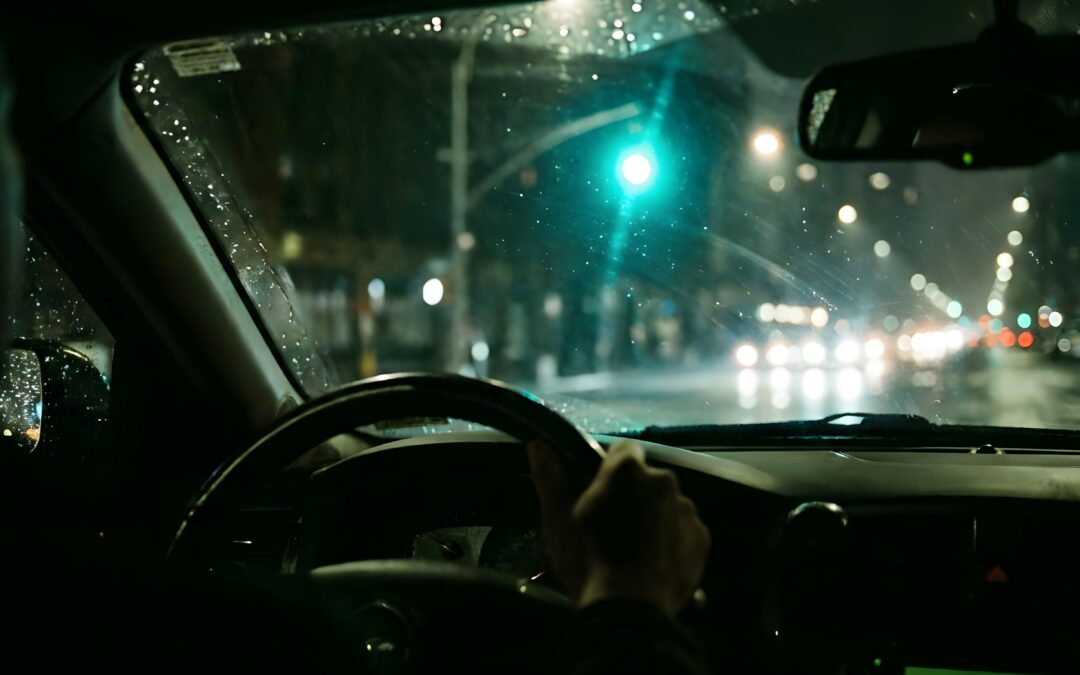
In complex personal injury, wrongful death, and commercial trucking litigation, liability often pivots on a single, deceptively simple question: What could the driver actually see?
When an accident occurs in the dead of night, on an unlit highway, or during inclement weather, both plaintiffs and defendants rush to reconstruct the scene. Frequently, a well-meaning investigator or insurance adjuster will head out to the location with a high-end digital camera, snap a few photos of the roadway, and present them as a factual representation of the driver’s perspective.
This is a critical mistake that can jeopardize an entire case.
Standard consumer photography—no matter how expensive the camera—cannot accurately replicate human vision in low-light environments. Relying on uncalibrated images not only misleads juries but also leaves your demonstrative evidence highly vulnerable to being barred from the courtroom by savvy opposing counsel. To truly capture what was available to be seen, attorneys must look to a scientifically validated nighttime accident visibility study.
🛑 Act Before the Scene Changes
If your pending case involves a catastrophic nighttime collision, waiting until the eve of trial to secure visual evidence is a recipe for disaster. Environmental conditions, seasonal foliage, and municipal street lighting can change rapidly.
Schedule a Strategy Consultation with Paul KayFetz Inc. today to plan a legally defensible testing strategy before critical scene data is lost forever.
The Fatal Flaw of Standard Digital Cameras in Low Light
To understand why standard photography fails in court, one must understand the profound divergence between how a digital sensor records a low-light environment and how the human eye processes it.
Digital cameras are engineered to produce aesthetically pleasing, sharp images. In low-light settings, modern smartphones and DSLR cameras automatically execute a series of complex internal modifications. They boost the ISO (sensor sensitivity), widen the aperture, alter contrast curves, and lengthen the exposure time. Alternatively, an investigator might use a powerful flash.
The resulting photograph usually falls into one of two categories:
- The Over-Exposed Illusion: The camera artificially brightens the dark roadway, making hazards, pedestrians, or debris visible in the photo that would have been entirely invisible to a driver traveling at 65 MPH.
- The Pitch-Black Distortion: The camera fails to register ambient light or low-contrast objects, rendering the image a wall of blackness that falsely suggests a driver was operating in complete blindness.
Neither of these outcomes reflects reality. Human eyes use a delicate combination of photopic (daylight), scotopic (nighttime), and mesopic (transitional) vision. We perceive contrast, glare, and peripheral movement through complex biological mechanisms that a standard consumer camera simply cannot mimic out of the box.
What is a Calibrated Nighttime Accident Visibility Study?
A scientifically sound nighttime accident visibility study is not a mere “accident recreation” or an amateur reenactment. As detailed in our comprehensive Visibility Study FAQs, it is a highly precise, engineering-based video or photographic record showing exactly what visual data was available to be seen under the precise conditions of the subject incident.
When executing a forensic visibility study, specialized engineering photography techniques are applied to match the exact luminance levels of the night in question. This involves:
- Luminance Matching: Measuring the ambient light, pavement reflectivity, and vehicle headlight output using calibrated light meters, then configuring the recording equipment to ensure the recorded image contrast matches the real-world scene contrast.
- Matching Lens Optics: Utilizing specific focal lengths that preserve natural human depth perception and driver perception distance, avoiding the distortion of wide-angle or telephoto lenses.
- Replicating Glare Dynamics: Accurately documenting how oncoming headlights or wet pavement reflections impact visibility without blowing out the entire image.
By combining these scientific measurement procedures with peer-reviewed methodologies, the final output provides a mathematically sound, lifelike depiction of the driver’s view. You can see the remarkable clarity and precision of these forensic tools by viewing our courtroom-admitted HD Video Samples.
Intersecting with Human Factors and Accident Reconstruction
A pristine video is only as valuable as the expert foundation supporting it. A calibrated visibility study does not exist in a vacuum; it serves as the foundational data that empowers human factors in auto accidents and reconstruction experts to perform their calculations accurately.
Driver Perception Distance and Perception-Reaction Time (PRT)
In a typical cross-examination, an opposing attorney might argue: “The hazard was right in front of your client, why didn’t they brake sooner?”
Without a visibility study, you are left arguing over subjective opinions. However, with an engineering-calibrated study, a human factors expert can determine the exact point on the roadway where a low-contrast hazard (such as a pedestrian wearing dark clothing or a jackknifed unlit trailer) became perceptually distinguishable from the background.
Once that precise driver perception distance is established mathematically, the accident reconstructionist can apply standard Perception-Reaction Time (PRT) formulas to determine if a reasonably prudent driver could have avoided the crash.
| Evidence Type | Jury Perception | Legal Vulnerability | Scientific Value |
| Standard Photo | Misleading/Confusing | High (Subject to Exclusion) | None |
| Amateur Video | Artificially Bright/Dark | High | Low |
| Calibrated Visibility Study | Clear, Real-world Reality | Low (Proven Track Record) | High (Peer-Reviewed) |
Overcoming the Admissibility Hurdle in the Courtroom
Introducing visual evidence of a nighttime scene is one of the most heavily litigated areas of trial practice. Opposing counsel will routinely object, claiming the visuals are prejudicial, lack foundation, or violate the rules of evidence under Daubert or Frye standards.
For fifty years, Paul KayFetz Inc. has routinely established the strict engineering foundations required to get these complex visuals admitted into evidence across multiple state and federal jurisdictions. This flawless track record stems directly from utilizing accepted engineering measurement procedures and publishing peer-reviewed papers that validate our technical methodologies.
Turning the Tables: Weaponizing Admissibility Against the Opposition
Securing a visibility study isn’t just an offensive strategy—it is your best defense. A major component of our consultation work involves evaluating and successfully keeping out of evidence your opponent’s flawed forensic photography, inaccurate animations, or misleading “computer cartoons.”
When an opposing expert attempts to introduce an uncalibrated graphic that makes a nighttime roadway look like broad daylight, we provide the technical ammunition necessary to expose their lack of scientific foundation. This defensive strategy has swung multi-million dollar results, including contributing to a notable $62 Million Verdict in past landmark litigation.
Why Timing is Everything in Nighttime Case Preparation
Many trial lawyers wait until the discovery phase is drawing to a close before thinking about demonstrative evidence. In nighttime visibility cases, this delay can prove fatal to your liability arguments.
The physical environment of an accident scene is constantly deteriorating or changing:
- Seasonal Foliage: Trees and bushes that blocked ambient light or sightlines in November may look entirely different during a June inspection.
- Infrastructure Changes: Municipalities frequently upgrade old yellow sodium streetlights to bright white LED fixtures, permanently altering the nighttime luminance profile of an intersection.
- Weather and Pavement Wear: New asphalt overlays or fading lane lines drastically shift how light reflects off the road surface at night.
To capture an accurate baseline, technical testing should be planned and completed as close to the incident date—and under identical moon phases and weather conditions—as possible.
To review our availability and structured rates for immediate scene deployment, please consult our transparent Expert Witness Fee Schedule. For a deeper dive into our firm’s technical credentials and institutional history, you can explore the background of our specialists on our About Us page or download Mr. Kayfetz’s full Curriculum Vitae.
Trust Science, Not Shutter Speed
When millions of dollars in verdicts or settlements hang in the balance, you cannot afford to rely on amateur snapshots or unverified digital videos to tell your client’s story. Juries expect to look through the eyes of the driver, and judges demand a rigorous scientific foundation before allowing them to do so.
By investing in a calibrated nighttime accident visibility study, you anchor your case in empirical truth, seamlessly bridge the gap between accident reconstruction and human factors, and protect your trial presentation from exclusionary objections.
📞 Protect Your Case with Proven Expertise
Do not let a flawed piece of opposing evidence dictate the outcome of your trial, and don’t risk your own evidence being excluded. Work with an expert who possesses over five decades of courtroom-tested engineering photography experience.
Contact Paul KayFetz Inc. today at (415) 380-8494, email us at paulkayfetz@yahoo.com, or fill out the secure intake form on our Contact Us Page to discuss your case strategy.
Recent Comments